THE PROBLEM
The problem companies face
Technical materials are scattered across websites, shared drives, repos, tickets, and personal experience—with conflicting versions and hard-to-find evidence.
01 / Knowledge Foundation
LIVE DEMO / AVAILABLE NOW
This is the public LLM Wiki demo for automotive and industrial analog selection. Ask about end applications, vendor comparisons, key specs, or teardown evidence—answers come with sources.
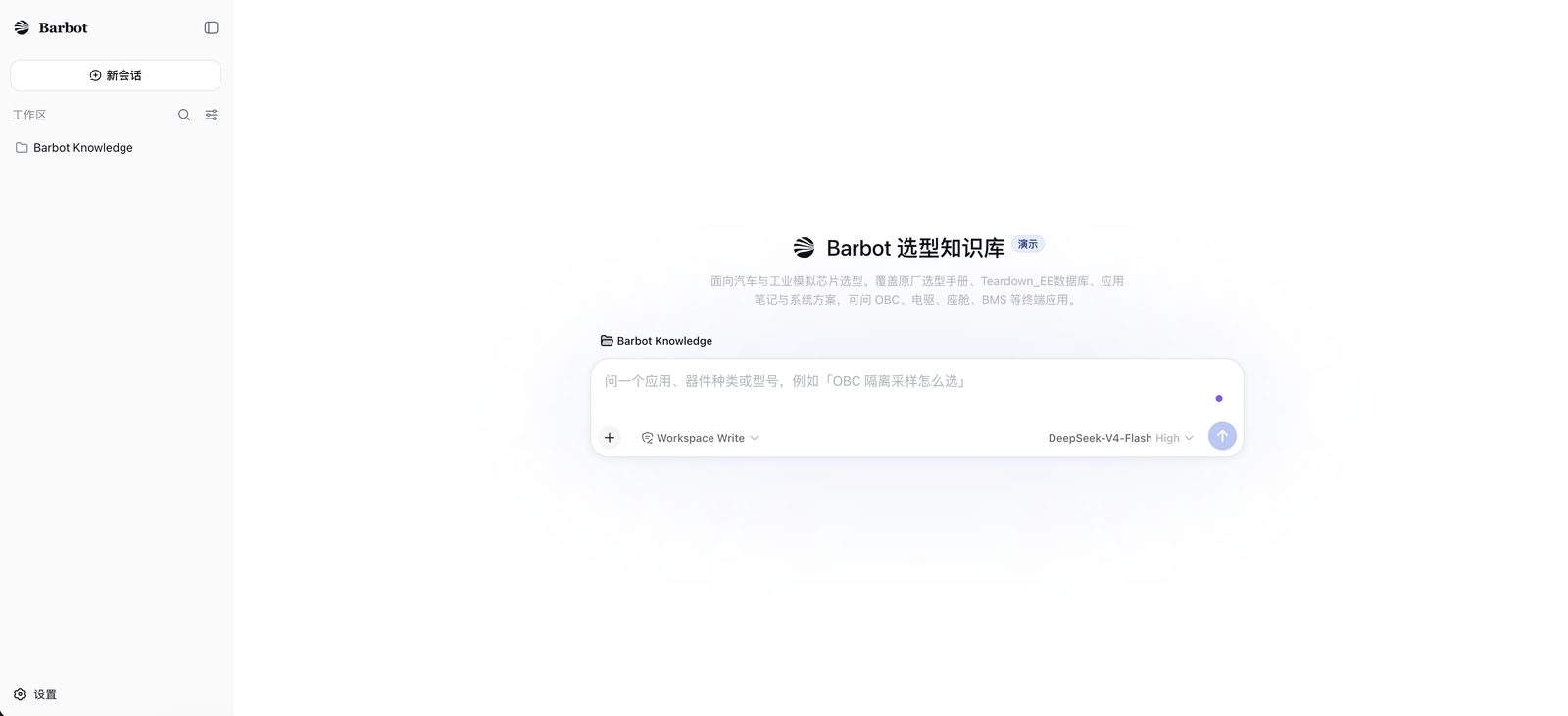 Click to open the workspace →
THE PROBLEM
Technical materials are scattered across websites, shared drives, repos, tickets, and personal experience—with conflicting versions and hard-to-find evidence.
THE SOLUTION
LLM Wiki turns chips, parameters, peripherals, APIs, SDKs, designs, and engineering conclusions into connected knowledge objects, giving Agents full context instead of isolated snippets.
HOW IT WORKS
CAPABILITIES
VALUE
FOR WHO
Semiconductor vendors, distributors, design houses, and engineering orgs with large technical corpora